Axar Hammered, India’s Bowling Left Searching for Answers
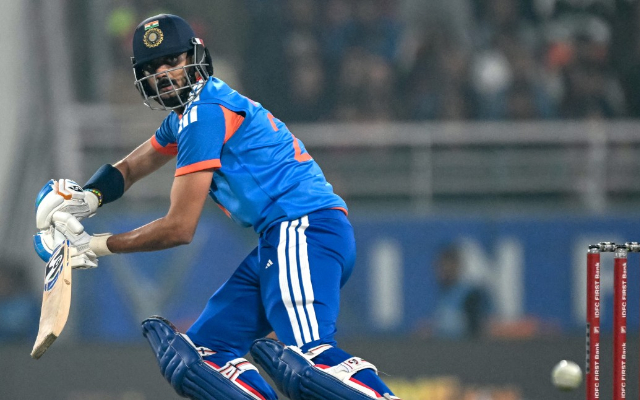
Either too short or too full – that seemed to be the pattern Axar Patel followed at the Rose Bowl. He conceded 63 runs in his four overs, making it not only his most expensive spell in T20Is but also the most expensive figures of his entire T20 career across 319 bowling innings.
Following that hammering, Axar found himself on a few unwanted lists. He now has the fourth most expensive bowling figures for India in T20Is and has conceded the most runs by an Indian bowler in a men’s T20I in Southampton.
Yes, the other bowlers were also taken to the cleaners, but as the most experienced bowler in the attack, more was expected from Axar. He did create one opportunity, only for the catch to be dropped at deep extra cover in his final over.
Apart from that solitary chance, he looked bereft of answers. It is rare to see a seasoned campaigner like Axar, renowned for his guile and control, being hit to all parts of the ground. While the England batters produced an outstanding display of strokeplay, Axar could have been more disciplined with his lines. Even he would admit that control deserted him throughout this UK tour. Added to that was the absence of the clever use of angles and variations in pace—hallmarks of Axar’s bowling that were largely missing throughout the T20I leg of the tour. He finished with just four wickets in six innings across the Ireland and England series combined. Even with the bat, he failed to score at the tempo expected of a lower middle-order batter.
As for the other bowlers, the pitch appeared to be an absolute road from the outset. The margin for error in Southampton was extremely small. The inexperience of India’s attack was evident as they repeatedly erred with their lines against England’s batters. Prince Yadav, who had looked impressive earlier in the series, was put under sustained pressure and eventually cracked. Arshdeep Singh was economical, conceding only 33 runs from his four overs, but he went wicketless. Given his stature as India’s leading wicket-taker in the format, it was a disappointing outing. Prasidh Krishna was the pick of the bowlers, finishing with figures of 1 for 38.
What further compounded India’s problems was the fielding. Several catches went down, and once again the standards in the field came under scrutiny.
Credit where it is due—there was very little the Indian bowlers could do once Jos Buttler and Harry Brook settled in. It was a batting masterclass and a thrashing of the highest order. The pair dismantled India’s bowling attack in a manner rarely witnessed. The former captain and the current captain combined to add 233 runs, rewriting the record books with a partnership for the ages.
The batting assault was unrelenting, with every type of bowling—regardless of line, length, or variation—proving ineffective. The pitch at the Rose Bowl offered such consistent bounce and pace that it briefly felt as though every delivery would be be dispatched to the boundary. Displaying an unconventional approach, both batters expertly found the gaps, manipulated the field, and kept the bowlers under constant pressure.
The post Axar Hammered, India’s Bowling Left Searching for Answers appeared first on Sports News Portal | Revsportz.


Comments
Post a Comment