Why Shubman Gill Must Replicate His English Masterclass in Sri Lanka
As India prepare for the crucial two-match Test series against Sri Lanka, starting August 15, the margin for error has vanished. Lying fifth in the World Test Championship (WTC) 2025-27 standings with a record of four wins and as many losses, India face a daunting mathematical reality. They must win eight out of their remaining nine Tests in the current cycle to guarantee a place in the 2027 WTC final. With Sri Lanka breathing down their neck in sixth place, even a solitary draw or a slip-up on this tour could severely damage India’s hopes of reaching the final.
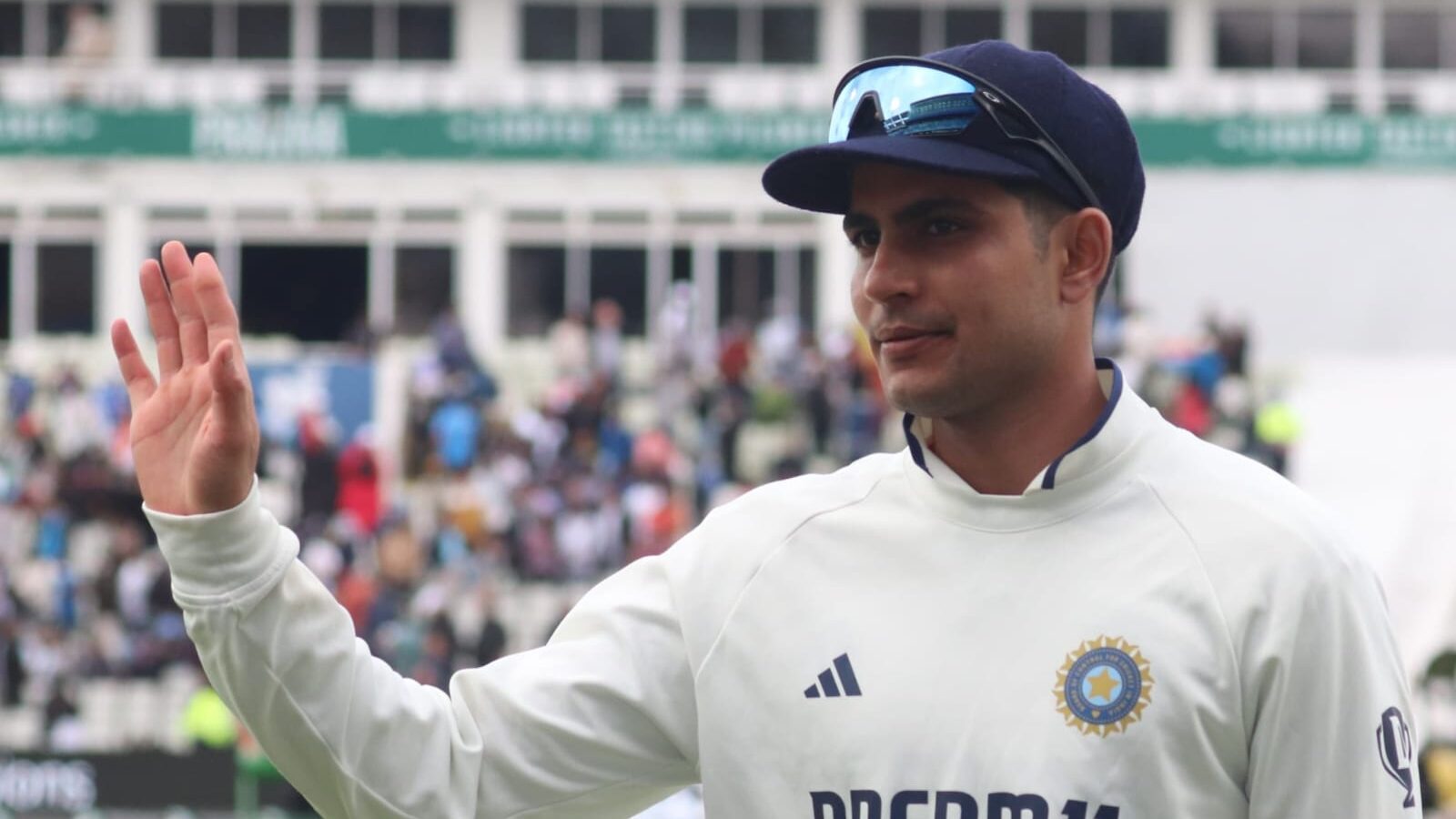
If India have to revive their flagging Test fortunes, then skipper Shubman Gill must be at heart of it. He must once again deliver a monumental batting performance to steer his side through a pivotal juncture. Gill’s individual output in the current WTC cycle has been nothing short of extraordinary. Across eight Tests, he has amassed 950 runs at a stunning average of 79.16, boasting five centuries, a half-century, and with a majestic top score of 269. He currently sits as the third-highest run-getter in the WTC 2025-27 cycle, trailing only England’s Joe Root, who has 1,108 runs in 13 Tests, and Harry Brook with 1,056 runs in 13 Tests.
Gill now only needs 50 more runs in the series opener against Sri Lanka to complete 1,000 runs in a WTC cycle. When he achieves this milestone, he will become only the fourth Indian batter to accomplish the feat, joining the ranks of Ajinkya Rahane, Rohit Sharma, and Yashasvi Jaiswal, who holds the national record with 1,798 runs in the previous cycle. To lead India to victory and continue his prolific run, Gill will have to bring out the extraordinary resolve he showed during India’s five-Test tour of England in 2025, which ended in a 2-2 draw.
During that high-profile series for the Anderson-Tendulkar Trophy, Gill delivered a historic, record-breaking batting performance that earned him the Player of the Series award. He scored 754 runs, the second-most by any captain in a single Test series in cricket history, trailing only Sir Donald Bradman’s 810 runs during the 1936-37 Ashes. Furthermore, Gill became the first Asian batter to cross both the 650-run and 700-run milestones in a single Test series on English soil. In England, the conditions allowed him to build long innings once the initial shine wore off the ball, leading to his epic 269-run knock at Edgbaston.
However, the conditions in Sri Lanka present a starkly different challenge. Unlike the seam-friendly conditions with true bounce and lateral movement in England, venues like Galle and the SSC in Colombo are notorious for offering immense assistance to spinners, with low bounce and sharp, aggressive turn right from the outset.
Walking in at the number four position means Gill will enter a direct spin-trap surrounded by multiple close-in fielders. He must overhaul his technical approach, swapping his horizontal-bat punching shots for soft-handed defensive blocks. He will need to confidently use his feet to smother the ball before it spins off the pitch and replicate the extreme patience he displayed in England.
Rebuilding India’s authority against spin is paramount. While India dominated their 2017 tour of Sri Lanka with three emphatic victories (a couple of innings wins), the current dynamic is vastly different. India are now carrying a vulnerability that has become difficult to ignore, as they no longer play spin with the authority that once defined them. Sri Lanka’s attack is headlined by slow left-arm orthodox bowler Prabath Jayasuriya, whose greatest strength is his conviction and understanding of home conditions. With 41 wickets in 13 innings, he bowls patiently and attacks relentlessly, waiting for uncertainty to arrive.
This series also serves as a defining true challenge of the Gill-Gambhir era in Test cricket. Following home losses to South Africa, head coach Gautam Gambhir’s stint has faced heavy scrutiny, putting intense tactical pressure on Gill’s young captaincy. With spearhead Jasprit Bumrah sidelined due to fitness issues, Gill must lead a younger, less-experienced bowling unit to victory.
In England, Gill successfully compartmentalised his leadership from his batting. In Sri Lanka, he must ensure that making high-stress tactical fielding changes under the subcontinental heat does not drain his mental stamina when it is his turn to bat, as he inherits a team caught between generations and identities, tasked with rebuilding certainty where doubt has begun to settle.
Follow RevSportz for latest sports news
The post Why Shubman Gill Must Replicate His English Masterclass in Sri Lanka appeared first on Sports News Portal | Revsportz.


Comments
Post a Comment