When the rain plays spoilsport, who pays the price?

The Asian Games are well and truly up and running, with all eyes on some of the biggest contingents and sporting nations as they chase medals across disciplines. Among the sports drawing attention is cricket — a sport that continues to grow far and wide, and one that offers something particularly significant at a continental event like this: an opportunity for associate nations to compete with the bigger cricketing powers.
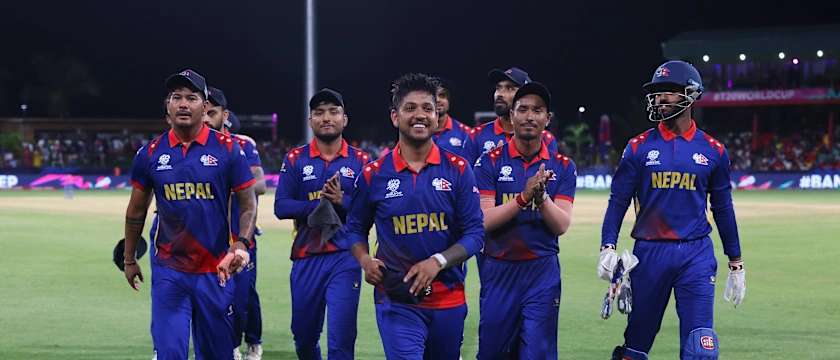
For these teams, it is not always about defeating a Test-playing nation. Sometimes, simply getting the opportunity to play against one is an achievement in itself. Behind that moment are years of hard work, qualification, preparation and dedication, all driven by the hope of representing their country on one of the biggest sporting stages in Asia.
Which is what makes the rain-related outcomes at the Asian Games particularly difficult to digest.
India’s T20 quarterfinal match against Afghanistan was completely washed out, sending India through to the semi-finals. Sri Lanka vs Nepal and Bangladesh vs Malaysia met the same fate, with the higher-ranked teams progressing. For the associate nations, there was no opportunity to take the field, compete or even test themselves against a stronger opponent.
Malaysia cricketer Virandeep Singh expressed that dejection and disappointment in a post on X: “Sad we couldn’t even make it to the ground. Waited 3 years for another opportunity to play against a Test nation but not meant to be I guess. Associate cricket is tough lol.”
It is difficult for anyone not to empathise. Cricket at the Asian Games is governed by the Asian Cricket Council and the Olympic Council of Asia, rather than the ICC. So, there is another factor to consider – the cricket body does not get to decide which season a multi-sport event is played in. The Asian Games are scheduled according to the larger sporting calendar, and unlike most other outdoor sports, cricket can be heavily affected by the season and weather conditions. While seasons may have little impact on several other disciplines, rain can bring cricket to a complete standstill.
But the larger question remains — when an associate nation waits years for an opportunity like this, is there a way to ensure that rain does not completely take that opportunity away?
The problem, however, is that cricket is uniquely vulnerable to rain. Unlike several other outdoor sports, the playing surface and ball conditions are integral to the game. Even indoor cricket has never proved to be a practical long-term solution for the traditional format.
There was an experiment in 2000, when Australia and South Africa played an ODI series at Melbourne’s Colonial Stadium under a covered dome. Initially, balls hitting the roof were declared dead and re-bowled. Later, a roof-hit was awarded six runs when the Big Bash League started — a rule that created its own absurdities before eventually being scrapped. As modern bats became more powerful, the idea became even less feasible. Cricket also relies heavily on natural conditions such as sunlight, wind, humidity and dew.

So, perhaps, there is no perfect answer.
But there is certainly room for the conversation to continue — especially with cricket’s growing presence on the Olympic stage and Los Angeles 2028 on the horizon. The weather may be beyond anyone’s control, but perhaps the rules surrounding its consequences could evolve.
Because for the big teams, a washed-out game can be an unfortunate interruption. For an associate nation, it can mean waiting years for a dream that lasted only as long as the rain stayed away.
Follow RevSportz for latest sports news
The post When the rain plays spoilsport, who pays the price? appeared first on Sports News Portal | Revsportz.


Comments
Post a Comment